Small Data Center Backup Power

Critical-power planning for small data centers must connect the real IT load, growth, redundancy, bypass, battery runtime and maintenance strategy.

Customer situation

  • The facility needs higher availability than a single small UPS installation.
  • Capacity may be expanded in phases while service access must remain practical.

Load and runtime

  • Define present critical load and realistic growth phases.
  • State whether redundancy is capacity reserve or fault tolerance.
  • Match runtime to generator start, shutdown plan or continuity objective.
  • Separate high-rate short-time power duty from extended-runtime energy duty using the actual load in kW.

UPS architecture

  • Three-phase online or modular UPS may be reviewed according to the load, topology and expansion plan.
  • N+X requires a specific module, load and failure assumption.
  • Maintenance bypass and distribution design are part of the project.

Battery configuration

  • Battery architecture must be considered with UPS and room layout.
  • External cabinets or lithium systems need protection and service planning.
  • Recharge time and charger capability affect repeated-outage operation.
  • High-voltage lithium may be reviewed as a high-rate short-time or energy-type extended-runtime direction after UPS compatibility confirmation.

Site limitations

  • Electrical room and access-route dimensions
  • Heat rejection, floor loading and maintenance clearance
  • Upstream supply, generator and downstream distribution

Maintenance considerations

  • Define module, fan and battery maintenance access.
  • Plan safe isolation and bypass procedures.
  • Keep approved configuration and revision records.

Procurement questions

  • What availability and redundancy objective is actually required?
  • Which documents, standards and tests are mandatory?
  • How will future capacity and battery expansion be handled?

Delivery and documentation

  • Confirm the selected model, accessories and packing list in writing.
  • Confirm certification and shipping documents by model and destination.
  • Define who handles installation, commissioning and local service.

Project risks

  • Using a Tier-1 tender specification with an unconfirmed alternative product
  • Deferring battery-room and distribution decisions
  • Assuming modular expansion without checking the complete electrical path

Related product directions

Field References

Small Data Center Backup Power Field References

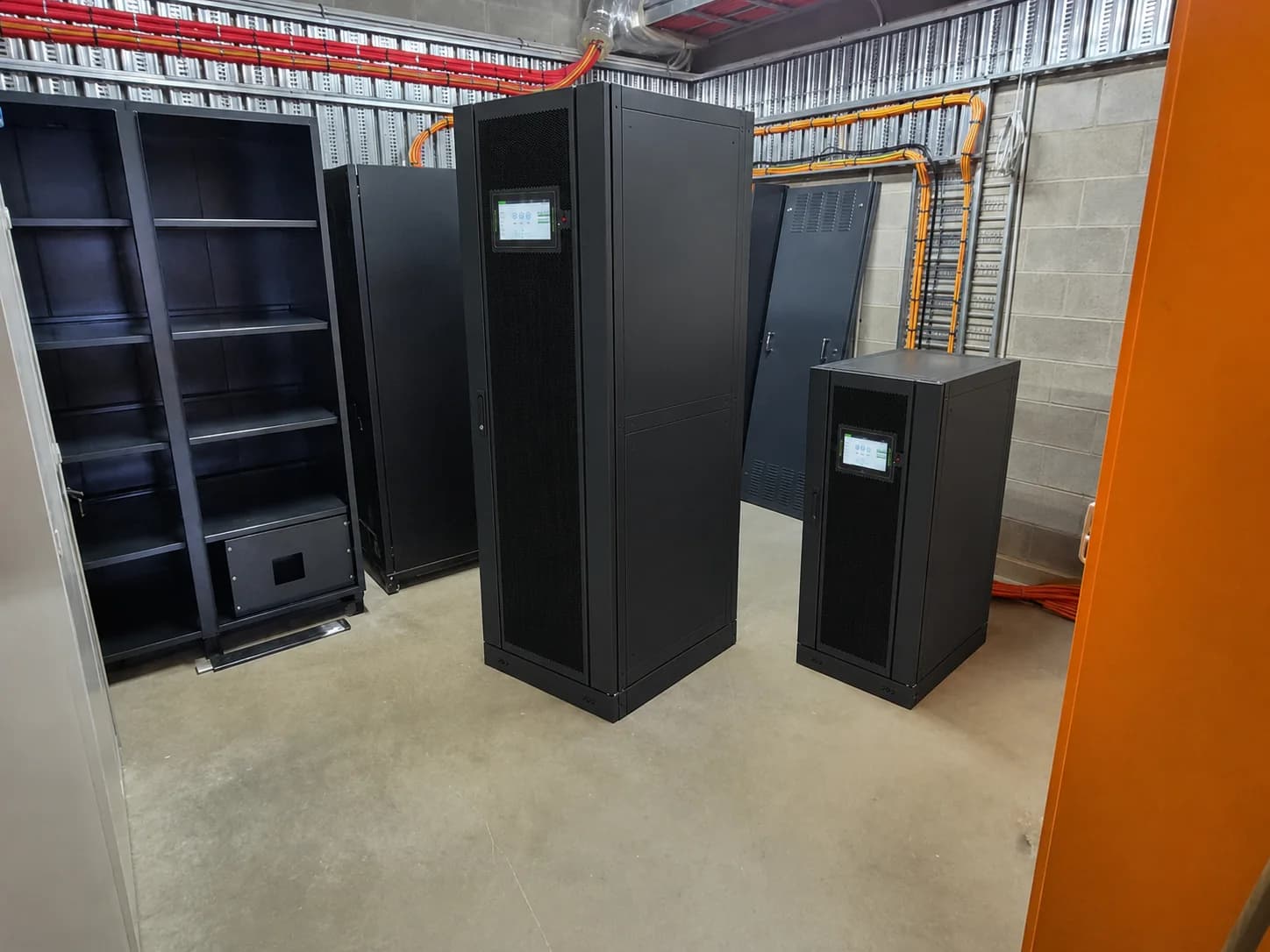
Representative site images provide visual context for the application path; load, runtime, architecture and installation details remain project-specific.

M Series modular UPS cabinets shown in an installation room reference image
M Series

Modular UPS Installation

Representative modular UPS installation in an on-site critical power environment.

View M Series Modular UPS
View Field References

Have a UPS or battery project?

Leave your name, phone or WhatsApp, email, country and a short message. We will review it and get back to you.