Lead-Acid to Lithium Upgrade

A UPS lithium upgrade is a compatibility project involving voltage window, charging, BMS, protection, communication, service and local requirements.

Customer situation

  • The customer wants to review footprint, maintenance or lifecycle objectives.
  • An existing lead-acid bank is due for replacement.

Load and runtime

  • Confirm measured load and required backup duty.
  • Do not assume equal nominal Ah produces equal project runtime.
  • Use the actual load and UPS minimum DC voltage when reviewing current and energy duty.

UPS architecture

  • Identify the exact UPS model, DC operating window and charging logic.
  • Confirm required interlocks, dry contacts or communications.
  • Confirm whether the existing system uses a center-tap or two-wire full bus.

Battery configuration

  • Review battery nominal and operating voltage, usable capacity and current.
  • Coordinate BMS, breaker, contactor, fusing, cable and cabinet.
  • Record the existing lead-acid battery quantity, series/parallel arrangement and cabinet condition.
  • Confirm normal and maximum charging voltage, charge-current limit, cut-off settings and restart behavior.
  • Review existing lead-acid float/equalize control before approving lithium charging behavior.

Site limitations

  • Installation environment and equipment clearances
  • Local commissioning and emergency isolation
  • Destination standards and transport documentation

Maintenance considerations

  • Define local BMS and alarm support capability.
  • Keep configuration, firmware and communication records.
  • Plan safe replacement and end-of-life responsibilities.

Procurement questions

  • What exact UPS and charger behavior must the battery support?
  • What is the existing battery quantity and electrical arrangement?
  • What are the UPS DC bus, minimum DC voltage and cut-off settings?
  • Is communication mandatory or are dry contacts acceptable?
  • Who will commission and service the system locally?

Delivery and documentation

  • Confirm the selected model, accessories and packing list in writing.
  • Confirm certification and shipping documents by model and destination.
  • Define who handles installation, commissioning and local service.

Project risks

  • Treating lithium as a physical drop-in replacement
  • Selecting from UPS power or nominal voltage only
  • Leaving communication and protection behavior undefined

Related product directions

Related site applications

Related technical guides

Field References

Lead-Acid to Lithium Upgrade Field References

Representative installation and integration images support the project path; they do not replace model, site or compatibility confirmation.

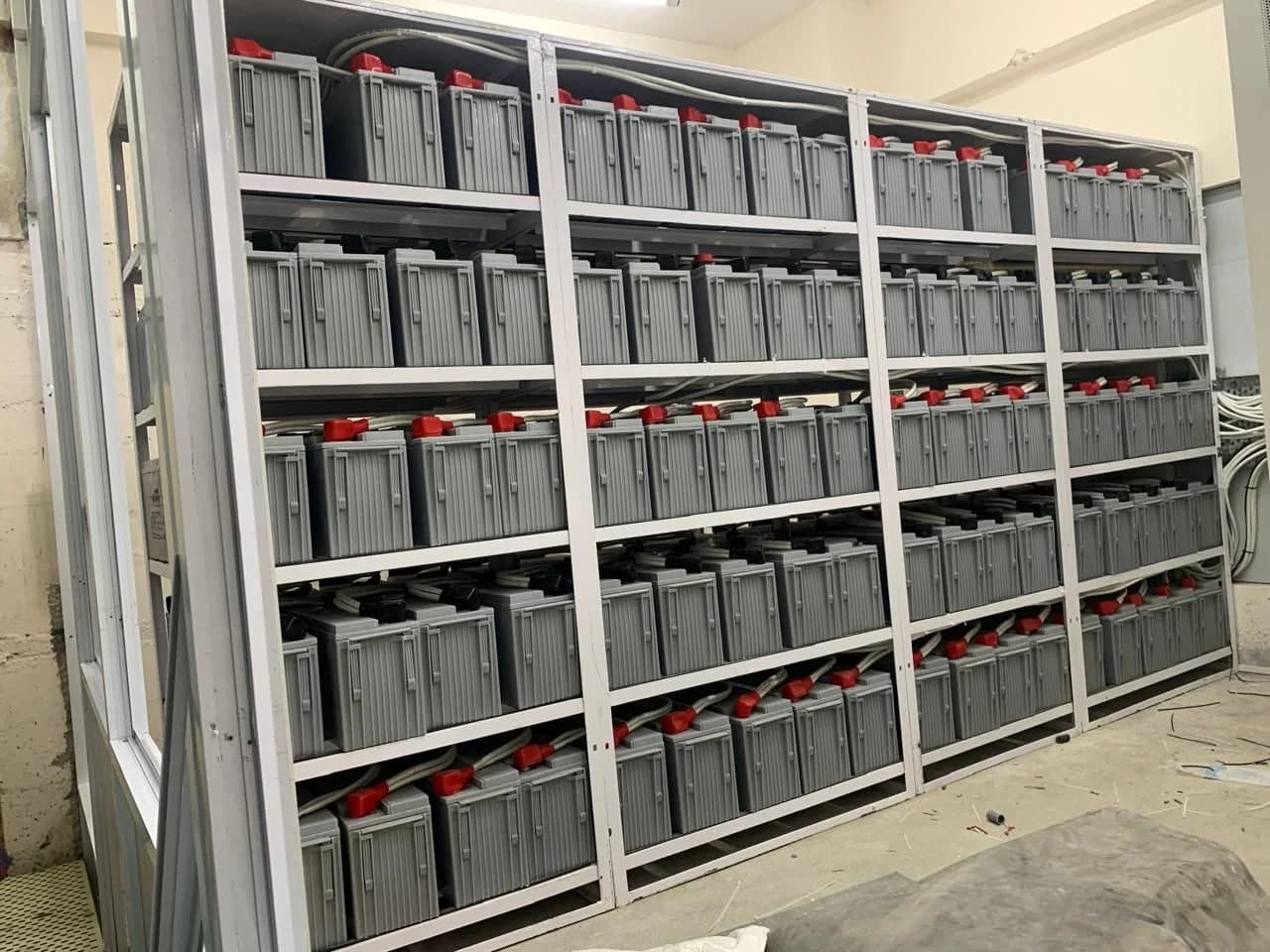
Battery rack installation shown in a supplied reference image
UPS batteries and cabinets

Battery rack installation reference

Battery rack arrangement shown as an external battery-system reference.

View UPS Batteries & Cabinets

High-voltage lithium battery cabinets shown during a supplied test reference image
UPS & Battery Integration Testing

UPS & High-Voltage Battery Integration

High-voltage LiFePO4 battery systems connected with UPS equipment for project integration testing.

View High-Voltage LiFePO4 Battery
View Field References

Planning a UPS battery replacement or lithium upgrade?

Leave your contact details and briefly describe the existing UPS or battery setup. We will review the next step with you.