Extended-Runtime LiFePO4 Battery for UPS

An extended-runtime UPS lithium project balances actual load, usable energy, charge-current limit, recharge time, cabinet arrangement and site conditions rather than relying on nominal Ah alone.

Customer situation

  • The site needs longer-duration UPS backup because generator support is absent, delayed or unreliable.
  • A weak-grid or repeated-outage site needs a reviewed energy and recharge strategy.

Load and runtime

  • Use the actual critical load in kW and required operating duration.
  • Published preliminary capacity directions are 200–314Ah with reference rates of approximately 0.48C–1C.
  • State UPS efficiency, minimum DC voltage, BMS cut-off, temperature and project margin in the runtime basis.

Use the actual load, required runtime and UPS DC bus to estimate the theoretical energy requirement before reviewing an extended-runtime configuration.

Check an Extended-Runtime Requirement

UPS architecture

  • Confirm the exact UPS model, topology, DC window and charging behavior.
  • Review three-phase or modular UPS redundancy and parallel-operation requirements.
  • Confirm center-tap or two-wire full-bus structure before selecting a platform.

Battery configuration

  • Review 192V, 384V or 512V as a starting platform direction.
  • Published energy-type architectures use 48V or 51.2V modules within the project-specific high-voltage system.
  • Confirm charge-current limit, expected recharge time, cabinet arrangement, protection and communication.

Site limitations

  • Cabinet footprint, installation space and access route
  • Floor loading, ventilation and maintenance clearance
  • Repeated-outage pattern, generator availability and ambient temperature

Maintenance considerations

  • Record approved charging, cut-off, alarm and restart settings.
  • Plan local isolation, BMS service and cabinet access.
  • Review capacity and recharge expectations when the load or outage pattern changes.

Procurement questions

  • What actual load and backup duration are required?
  • How much charging current is available and what recharge time is acceptable?
  • What cabinet space, floor loading and cable route are available?
  • What protocol, certification and local commissioning scope are required?

Delivery and documentation

  • Confirm the selected model, accessories and packing list in writing.
  • Confirm certification and shipping documents by model and destination.
  • Define who handles installation, commissioning and local service.

Project risks

  • Selecting extended runtime from nominal Ah without the complete duty basis
  • Adding energy beyond the practical UPS charger and recharge capability
  • Underestimating cabinet, floor-loading and maintenance requirements

Related product directions

Related site applications

Related technical guides

Field References

Extended-Runtime LiFePO4 Battery for UPS Field References

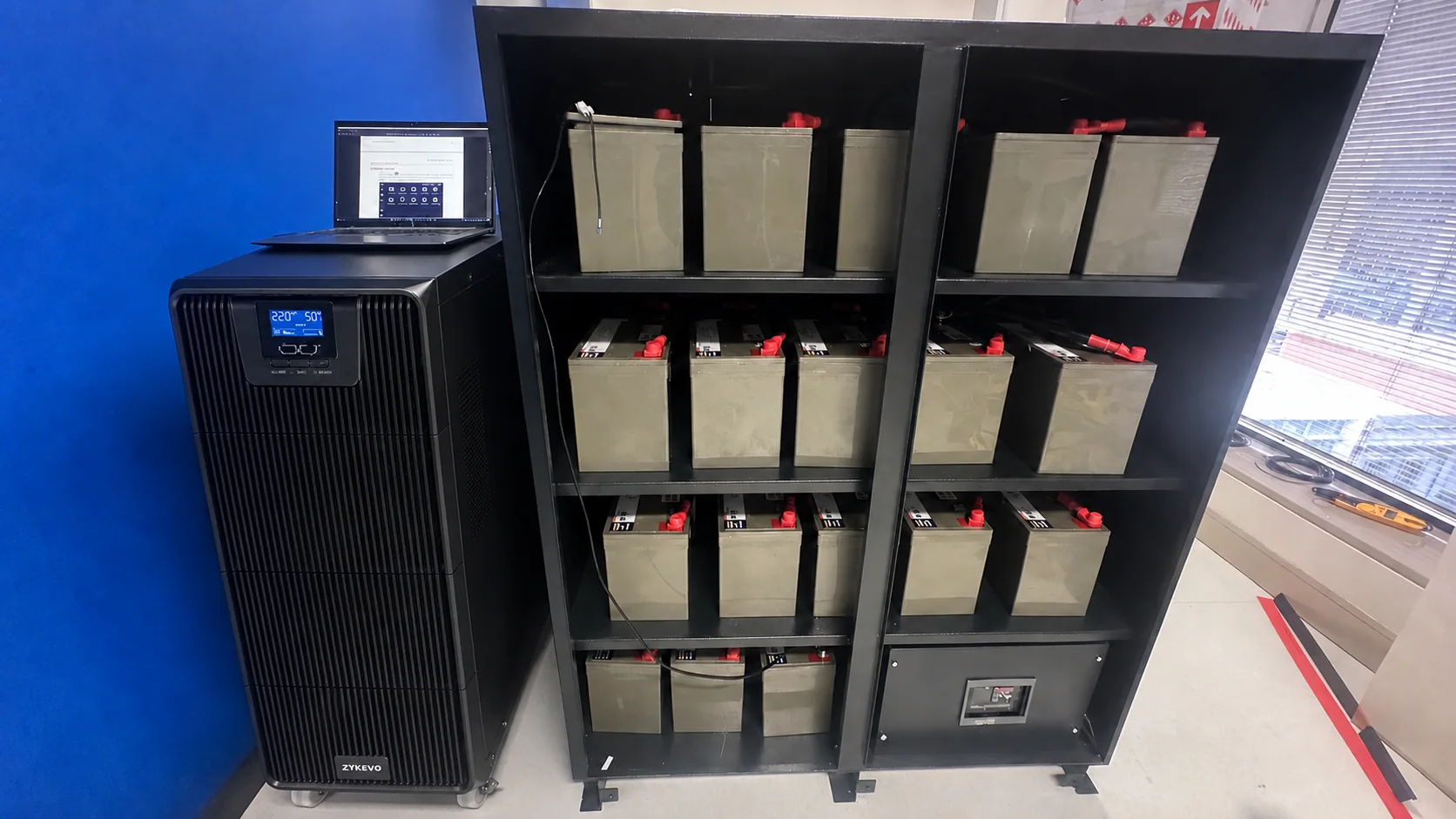
Representative installation and integration images support the project path; they do not replace model, site or compatibility confirmation.

TITAN UPS beside an open external battery cabinet in a field reference image
UPS batteries and cabinets

Three-Phase UPS with Battery Cabinets

Representative TITAN Series installation with external battery cabinets for extended backup applications.

View TITAN Series
View Field References

Need help matching a lithium battery to your UPS?

Send us your contact details and a short message. If available, you can mention the UPS model, load or required backup time in the message.