512V UPS battery platform
512V LiFePO4 Battery for UPS Projects
Preliminary 512V high-rate and energy-type LiFePO4 battery directions for compatible three-phase and modular UPS projects, selected through current, DC-window, runtime, charger, topology and protocol review.
Preliminary Technical Specification — nominal voltage alone does not confirm UPS compatibility.
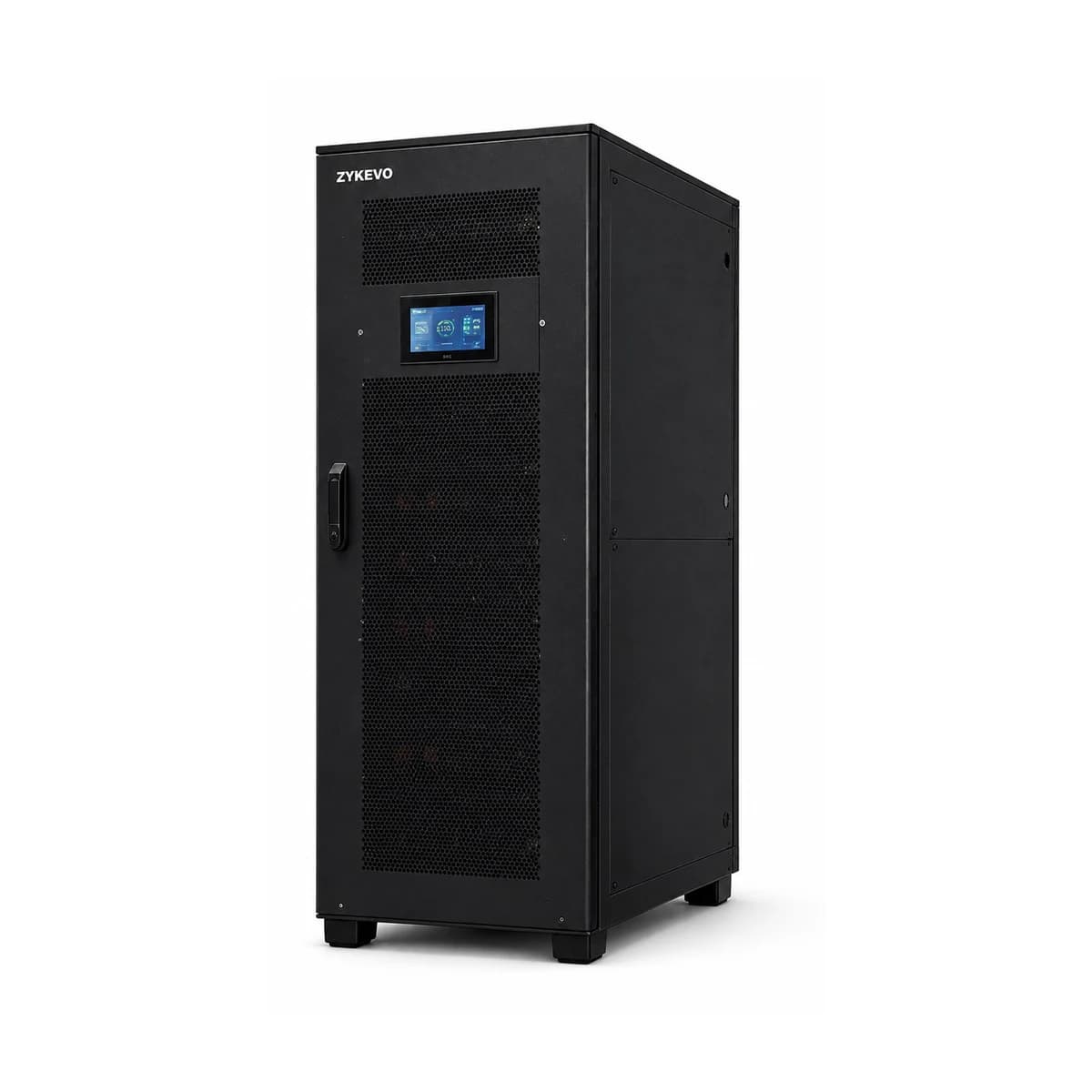
Platform applications
Where the 512V direction may be reviewed
- Three-phase and modular UPS projects using a reviewed 512V DC platform
- Short-time high-power server-room and small-data-center backup
- Generator bridging and critical IT duty
- Extended-runtime and weak-grid backup
- Lead-acid-to-lithium replacement evaluation
Already know the load and runtime? Use the Battery Planner to review the preliminary capacity requirement for a 512V-class UPS project.
Calculate Preliminary RequirementPreliminary Platform Data
512V High-Rate Platform
Published 25–100Ah directions for short-time high-power duty. Runtime remains dependent on the approved constant-power curve and project conditions.
Swipe horizontally to view all parameters.
| Preliminary catalogue code | Direction | Capacity | Nominal energy | Operating range | Max charge | Max continuous discharge | Reference rate | Module architecture |
|---|---|---|---|---|---|---|---|---|
| ZY-HV512-25HProposed model | High-rate / Short-time | 25Ah | 12.8kWh | 448–552V | 25A | 100A | 4C | 64V 25Ah × 8 |
| ZY-HV512-50H-100AProposed model | High-rate / Short-time | 50Ah | 25.6kWh | 448–552V | 50A | 100A | 2C | 64V 50Ah × 8 |
| ZY-HV512-50H-150AProposed model | High-rate / Short-time | 50Ah | 25.6kWh | 448–552V | 50A | 150A | 3C | 64V 50Ah × 8 |
| ZY-HV512-50H-200AProposed model | High-rate / Short-time | 50Ah | 25.6kWh | 448–552V | 50A | 200A | 4C | 64V 50Ah × 8 |
| ZY-HV512-100H-400AProposed model | High-rate / Short-time | 100Ah | 51.2kWh | 448–552V | 100A | 400A | 4C | 64V 100Ah × 8 |
| ZY-HV512-100H-600AProposed model | High-rate / Short-time | 100Ah | 51.2kWh | 448–552V | 100A | 600A | 6C | 64V 100Ah × 8 |
Proposed model. Preliminary catalogue code. Subject to project confirmation. Subject to OEM confirmation.
Preliminary Platform Data
512V Energy-Type Platform
Published 200–314Ah directions for extended-runtime duty. Only selected configurations may support TCP/IP and SNMP.
Swipe horizontally to view all parameters.
| Preliminary catalogue code | Direction | Capacity | Nominal energy | Operating range | Max charge | Max continuous discharge | Reference rate | Module architecture | Communication direction |
|---|---|---|---|---|---|---|---|---|---|
| ZY-HV512-200EProposed model | Energy-type / Extended-runtime | 200Ah | 102.4kWh | 448–552V | 100A | 200A | 1C | 51.2V 200Ah × 10 | CAN / RS485 / dry contacts; selected configuration may support TCP/IP and SNMP |
| ZY-HV512-280EProposed model | Energy-type / Extended-runtime | 280Ah | 143.3kWh | 448–552V | 140A | 140A | 0.5C | 51.2V 280Ah × 10 | CAN / RS485 / dry contacts; selected configuration may support TCP/IP and SNMP |
| ZY-HV512-314EProposed model | Energy-type / Extended-runtime | 314Ah | 160.7kWh | 448–552V | 150A | 150A | 0.48C | 51.2V 314Ah × 10 | CAN / RS485 / dry contacts |
Proposed model. Preliminary catalogue code. Subject to project confirmation. Subject to OEM confirmation.
Common platform values
Published 512V reference boundaries
Preliminary battery operating range: 448–552V
Published maximum charging-voltage reference: 552V
Published cut-off reference range: 448–464V
CAN, RS485 and dry contacts are common directions; selected 512V configurations may support TCP/IP and SNMP
Final configuration, dimensions, weight, discharge performance, communication functions and certification scope are subject to project requirements, model availability and OEM confirmation.
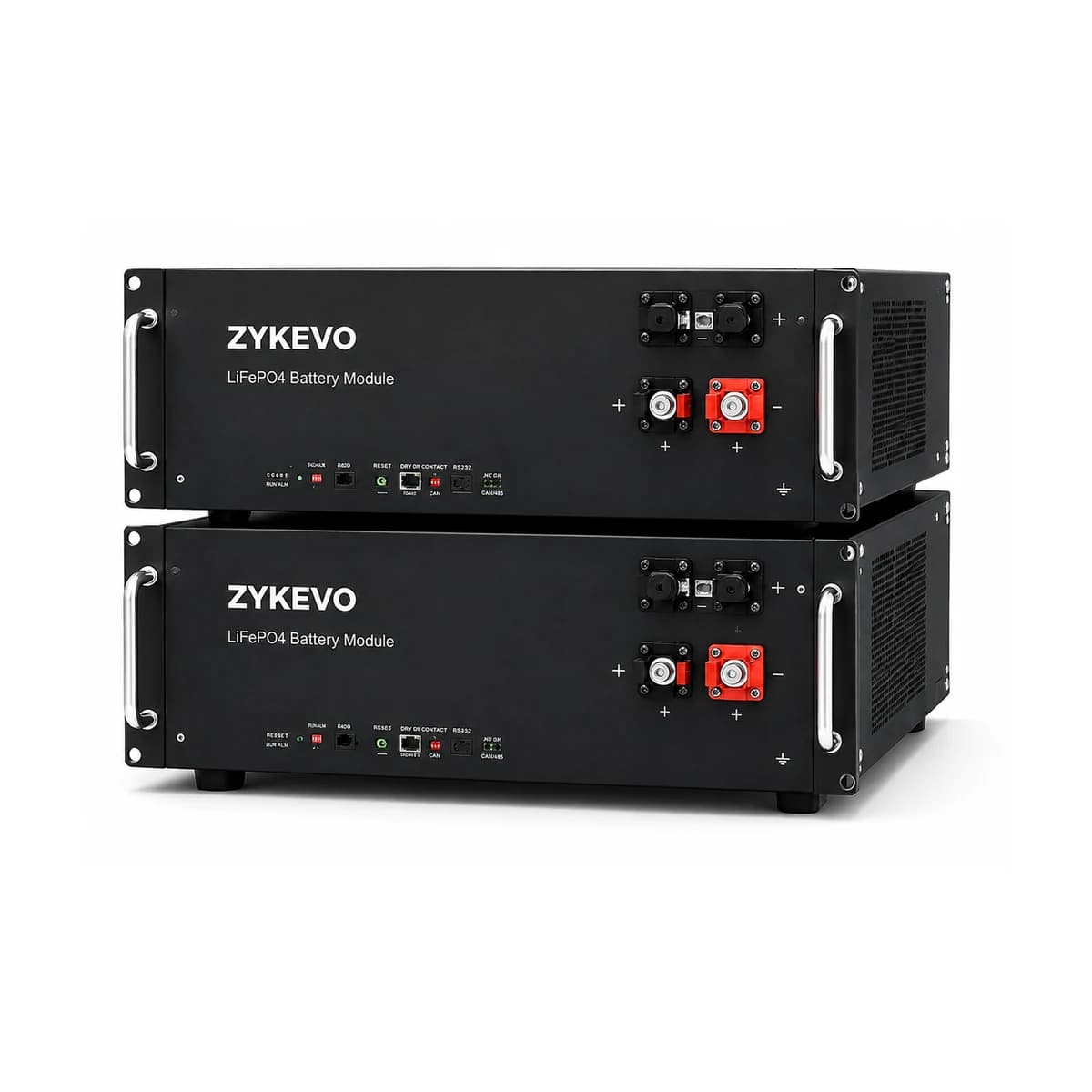
Module architecture
Module-level values build the UPS-side platform
- Published high-rate directions use 64V modules connected into the 512V platform.
- Published energy-type directions use 51.2V modules connected into the 512V platform.
- The physical interface and module arrangement do not by themselves confirm compatibility with a UPS protocol or cabinet design.
UPS matching notes
Compatibility review before model selection
- Confirm the exact UPS model, topology and complete DC operating window.
- Size from the actual load in kW and the minimum UPS DC voltage.
- Use an approved constant-power discharge curve for any fixed short-time duty.
- Confirm charging voltage, charge-current limit and required recharge time.
- Confirm center-tap or two-wire full-bus structure.
- Confirm the required CAN, RS485, dry-contact or selected network communication protocol.
Nominal voltage alone does not confirm UPS compatibility.
Battery selection must use the actual load in kW and the UPS minimum DC voltage, not only the UPS rated kVA or nominal battery voltage.
A physical CAN or RS485 interface does not by itself confirm UPS protocol compatibility.
Center-tap or two-wire full-bus structure must be confirmed from the actual UPS and battery circuit.
Final charging voltage, charge-current limit, cut-off voltage, protection behavior and communication protocol require project review.
Do not use a fixed 10-, 15- or 30-minute runtime claim without an approved constant-power discharge curve for the exact battery model, current level, end voltage and temperature.
Preliminary Technical Specification
Review the complete preliminary product matrix
Final configuration, dimensions, weight, discharge performance, communication functions and certification scope are subject to project requirements, model availability and OEM confirmation.
Need help matching a lithium battery to your UPS?
Send us your contact details and a short message. If available, you can mention the UPS model, load or required backup time in the message.