High-Rate Lithium Battery for UPS Short-Time Backup

A high-rate UPS lithium battery project prioritizes short-time power at the actual load and minimum DC voltage, supported by model-specific current limits and constant-power discharge data.

Customer situation

  • The UPS needs short-time high-power backup for generator bridging, controlled shutdown or critical IT continuity.
  • The project may involve a server room, small data center, modular UPS or other critical load with a defined short-duration duty.

Load and runtime

  • Use the actual critical load in kW and the UPS minimum DC voltage, not only rated kVA or nominal battery energy.
  • Published preliminary capacity directions are 25–100Ah with reference continuous rates of 2C–6C.
  • A fixed 10-, 15- or 30-minute claim requires an approved constant-power discharge curve for the exact model, current level, end voltage and temperature.

Short backup time does not mean Ah alone determines the battery. Use the Planner to compare the energy-based capacity class with the power-adjusted class.

Check a Short-Time Requirement

UPS architecture

  • Confirm the exact UPS brand, model, topology and complete DC operating window.
  • Review three-phase or modular UPS battery input, generator-bridging sequence, redundancy and parallel-operation requirements.
  • Confirm center-tap or two-wire full-bus structure before selecting a platform.

Battery configuration

  • Review 192V, 384V or 512V as a starting platform direction, not a compatibility approval.
  • Confirm BMS continuous-current level, cut-off settings, contactor, breaker, fuse and cable arrangement.
  • Published 64V modules are architecture building blocks for the high-rate platforms, not the top-level product definition.

Site limitations

  • Generator start and stabilization time
  • Ambient temperature and approved discharge-curve conditions
  • Cabinet access, floor loading, cable route and maintenance clearance

Maintenance considerations

  • Define alarm, shutdown and restart behavior after a BMS protection event.
  • Keep the approved model, firmware, communication and discharge-curve revision with the project record.
  • Test the complete UPS, battery and generator operating sequence under local responsibility.

Procurement questions

  • What is the actual critical load in kW?
  • What minimum UPS DC voltage and end voltage apply?
  • Which model-specific constant-power curve supports the requested duty?
  • What BMS current, topology and communication behavior are required?

Delivery and documentation

  • Confirm the selected model, accessories and packing list in writing.
  • Confirm certification and shipping documents by model and destination.
  • Define who handles installation, commissioning and local service.

Project risks

  • Promising a fixed short-time runtime from nominal kWh alone
  • Selecting current capability from UPS kVA without minimum DC voltage
  • Treating a physical CAN or RS485 port as protocol approval

Related product directions

Related site applications

Related technical guides

Field References

High-Rate Lithium Battery for UPS Short-Time Backup Field References

Representative installation and integration images support the project path; they do not replace model, site or compatibility confirmation.

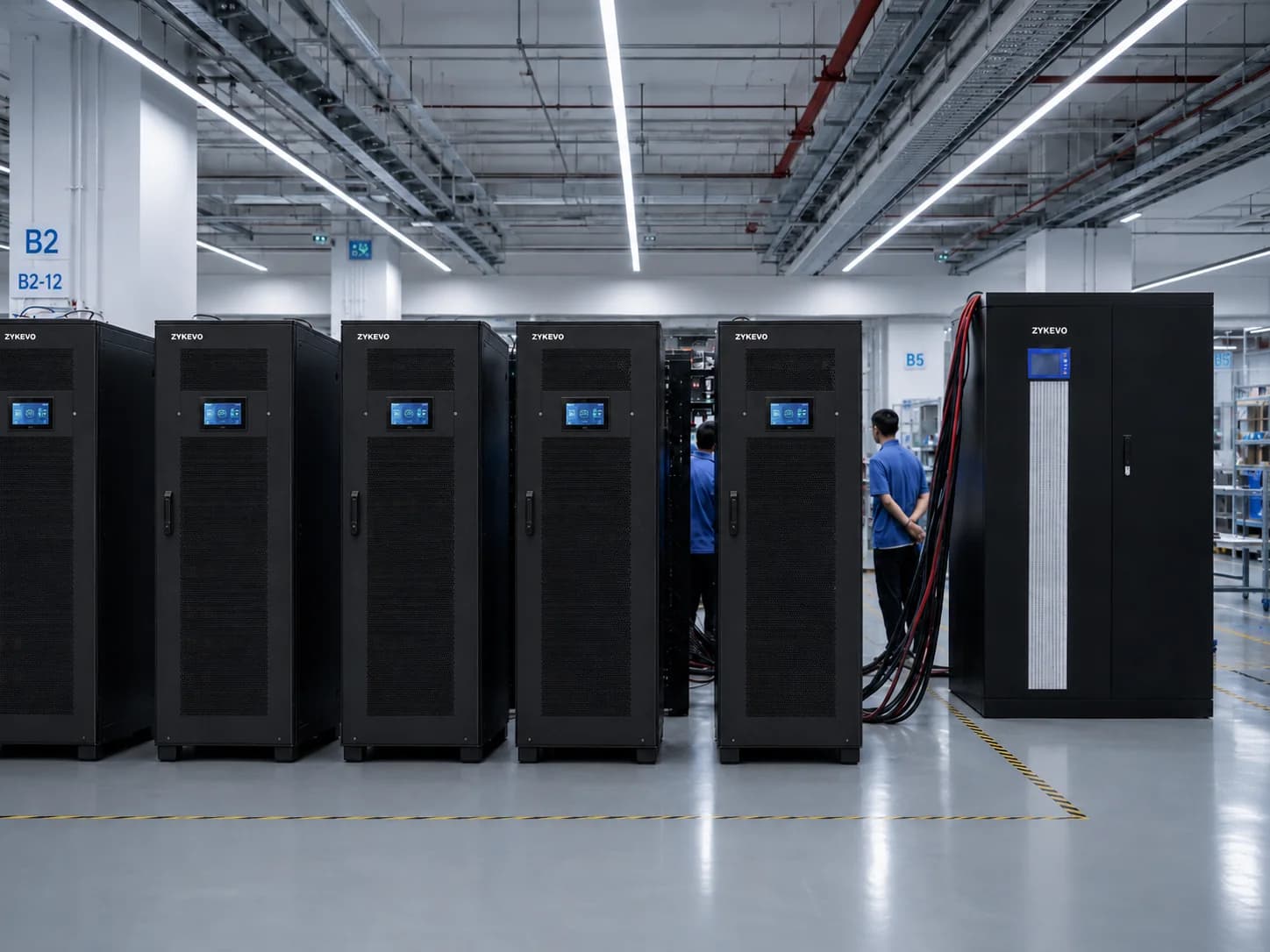
High-voltage lithium battery cabinets shown during a supplied test reference image
UPS & Battery Integration Testing

UPS & High-Voltage Battery Integration

High-voltage LiFePO4 battery systems connected with UPS equipment for project integration testing.

View High-Voltage LiFePO4 Battery
View Field References

Need help matching a lithium battery to your UPS?

Send us your contact details and a short message. If available, you can mention the UPS model, load or required backup time in the message.